
Is Your Home's Electrical System Ready for Winter? 7 Things to Check This Fall 🍂⚡
September 4, 2026
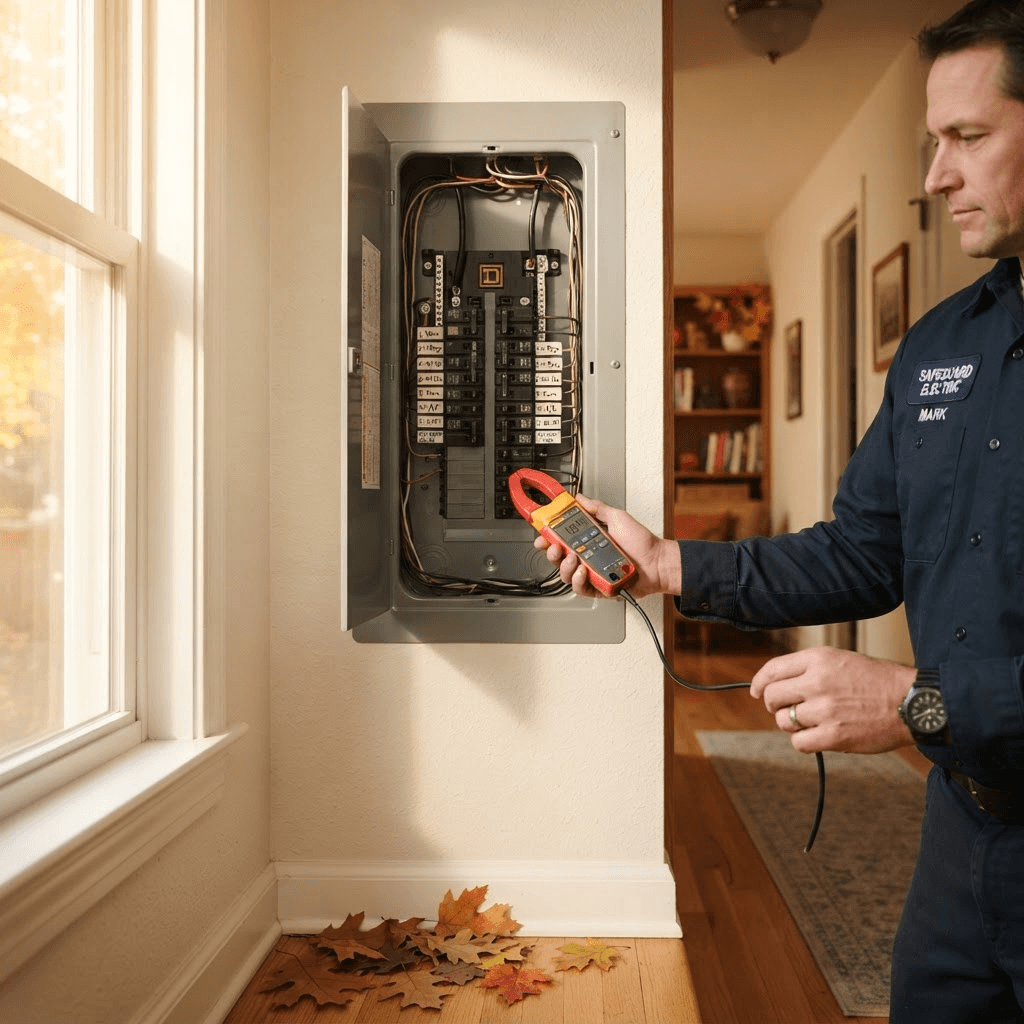
As temperatures begin to drop in Columbia, TN, your home's electrical system may soon be working harder. Heating equipment, portable heaters, holiday lights, longer nights, and more time spent indoors can all increase electrical demand during the colder months.
Fall is an ideal time to identify electrical issues before winter arrives. A few preventative checks now can help you spot aging equipment, overloaded circuits, damaged outlets, and other problems before your household's winter power usage increases.
Here are seven electrical items homeowners should check this fall to prepare for the season ahead.
1. Check Your Electrical Panel
Your electrical panel distributes power to the circuits throughout your home. As winter approaches, those circuits may experience additional demand from heating equipment, lighting, holiday decorations, and other seasonal devices.
Pay attention to warning signs such as:
- Breakers that trip repeatedly
- Buzzing or crackling sounds
- Unusual warmth around the panel
- Rust, corrosion, or visible damage
- Burning or unusual odors
- A panel with little or no room for additional circuits
A tripped breaker doesn't automatically mean you need a new electrical panel. However, recurring problems should be professionally evaluated rather than repeatedly resetting the breaker.
If you live in an older home around Columbia, fall is also a good opportunity to have an aging panel inspected before winter increases your electrical demands.
2. Inspect Outlets and Switches for Warning Signs
Outlets and switches can provide early clues that something isn't working properly behind the walls.
Walk through your home and look for outlets or switches that are:
- Loose or damaged
- Discolored
- Warm to the touch
- Making buzzing or crackling sounds
- No longer working consistently
- Producing unusual odors
You should also pay attention to plugs that repeatedly fall out of receptacles or lights that flicker when a particular switch is used.
Don't ignore a warm, scorched, or damaged outlet. Stop using it and have the problem evaluated by a qualified electrician.
3. Make Sure You're Using Space Heaters Safely
Portable space heaters can place significant demand on a circuit.
If you plan to use one this winter, plug it directly into a properly functioning wall outlet and follow the manufacturer's instructions. Avoid powering space heaters through extension cords or power strips unless the equipment manufacturer specifically permits that setup.
You should also avoid plugging several high-demand devices into the same circuit.
If using a heater consistently causes a breaker to trip, don't simply move the heater around until you find an outlet that works. Recurring breaker trips are a reason to have the circuit evaluated.
4. Check GFCI Protection Around Your Home
Ground-fault circuit interrupters, commonly called GFCIs, are designed to quickly interrupt power when certain electrical leakage conditions are detected.
They're especially important in locations where electricity may be used near water or moisture.
Depending on the home and applicable electrical requirements, GFCI protection may be found around:
- Bathrooms
- Kitchens
- Garages
- Basements
- Outdoor receptacles
- Laundry areas
- Other damp or wet locations
Many GFCI receptacles include TEST and RESET buttons that allow homeowners to verify basic operation according to the manufacturer's instructions.
If a GFCI won't reset, repeatedly trips, or appears damaged, have it professionally inspected.
5. Inspect Outdoor Electrical Equipment Before Winter
Fall weather, falling branches, moisture, landscaping work, and normal aging can take a toll on exterior electrical components.
Before colder weather arrives, inspect accessible outdoor equipment such as:
- Exterior outlets
- Outlet covers
- Outdoor lighting
- Landscape lighting
- Extension cords used outdoors
- Electrical equipment around patios or decks
Look for cracked covers, exposed wiring, damaged cords, loose fixtures, or other visible deterioration.
Outdoor receptacles should have appropriate weather protection for their location and intended use. If you're unsure whether your exterior electrical setup is suitable, an electrician can inspect it.
6. Plan Ahead for Holiday Lights and Decorations
Holiday decorations can quickly turn a few outlets into heavily used electrical areas.
Before installing lights this year, inspect strands and electrical decorations for damaged insulation, exposed conductors, broken plugs, or other deterioration. Follow the manufacturer's limits when connecting multiple strands together.
Avoid creating a chain of overloaded extension cords and power strips simply because you need another outlet.
For outdoor decorations, use products specifically listed or labeled for outdoor use and connect them only to appropriately protected outdoor receptacles.
If your home doesn't have enough conveniently located outlets for your holiday setup, consider having additional permanent receptacles installed instead of relying on temporary wiring year after year.
7. Pay Attention to Flickering Lights and Recurring Power Problems
Don't dismiss flickering or dimming lights simply because they eventually return to normal.
A single flickering bulb could be something as simple as a loose bulb. However, recurring flickering across several fixtures or rooms may indicate another electrical issue that deserves investigation.
Schedule an electrical inspection if you notice:
- Lights dimming when appliances start
- Multiple rooms experiencing flickering
- Breakers frequently tripping
- Outlets intermittently losing power
- Buzzing electrical components
- Burning smells
- Unexplained electrical interruptions
The goal isn't to guess what's causing the problem. Professional troubleshooting can identify the source and determine what, if anything, needs to be repaired.
Why Is Fall a Good Time for an Electrical Inspection?
Fall provides an opportunity to address electrical concerns before winter adds additional demand to your home.
It's particularly worth considering an inspection if you recently purchased an older property, are beginning a remodeling project, have experienced recurring electrical issues, or plan to add new equipment.
An electrician can evaluate areas such as your electrical panel, circuits, outlets, switches, and other components based on the specific concerns in your home.
For homeowners planning renovations, fall is also a smart time to discuss future electrical requirements. A kitchen remodel, workshop, home addition, new HVAC equipment, or EV charger may require dedicated circuits or additional electrical capacity.
Frequently Asked Questions About Fall Electrical Safety
Why do breakers trip more often during winter?
Winter can bring increased use of heaters, appliances, lighting, and other electrical equipment. If too much demand is placed on a circuit, its breaker may trip. Recurring trips should be evaluated to determine the underlying cause.
Can I plug a space heater into a power strip?
Space heaters should generally be connected directly to an appropriate wall outlet according to the heater manufacturer's instructions. High-power heating equipment can create excessive demand on extension cords and power strips that aren't designed for that use.
Should I have my electrical panel inspected before winter?
If your panel is older, breakers frequently trip, you notice unusual sounds or heat, or your household's electrical needs have increased, scheduling an inspection can help determine whether maintenance, repairs, additional circuits, or an upgrade should be considered.
What electrical warning signs require immediate attention?
Smoke, sparking, visible burning, strong burning odors, or signs of an electrical fire require immediate action. Stay away from the affected equipment and contact emergency services when there is an immediate danger. Never use water on an electrical fire.
Prepare Your Columbia, TN Home for Winter with State Line Electric
Winter electrical problems are much easier to address before you're dealing with them on a cold Tennessee night.
If you've noticed frequent breaker trips, flickering lights, damaged outlets, an aging electrical panel, or other electrical concerns, fall is a great time to have your system professionally evaluated.
State Line Electric provides electrical troubleshooting, repairs, panel upgrades, lighting, remodel wiring, new construction electrical services, EV charger installation, and more for homeowners, remodelers, and businesses throughout Columbia, TN and Southern Middle Tennessee.
Get ahead of winter electrical problems this fall. Call State Line Electric at (931) 922-3441 or visit our contact page to request your FREE estimate.
Ready to plan your project?
Get a free estimate from a licensed master electrician serving Columbia and Southern Middle Tennessee.